Reports disagree because every team pulls data differently
03 / Services / Data Engineering
Bioinformatics Data Engineering & AnalyticsGive your data direction.
Genomics data pipelines, ETL, big data processing, AI/ML, and healthcare analytics.

01 / The problem
What usuallygets in the way.
Connect scattered sources into dependable pipelines, so the data your team needs is modelled, tested and ready to use.
Manual exports and spreadsheets hold critical workflows together
Pipelines break silently and nobody notices until a decision is wrong
02 / What I build
What you get.
- Source-to-warehouse pipelines with tests and alerts
- A clear data model and documentation
- Scheduled, observable jobs your team can maintain
03 / How it works
From sources to trusted tables
A typical architecture for this kind of work. Scroll to follow the flow, or hover a stage for detail.
Sources
Apps, APIs, files and databases, inventoried with owners.
Ingestion
Incremental loads that can be replayed safely.
Validation
Schema and freshness checks before data moves on.
Transformation
Tested models that turn raw records into business entities.
Warehouse
One governed place for analytics and AI to read from.
Serving
Dashboards, reverse ETL and features for downstream systems.
04 / In depth
The details.
I build data engineering and analytics for bioinformatics and healthcare teams: pipelines that move genomics, sample and clinical data into tested, versioned storage, so scientists, analysts and machine learning models all work from the same reproducible data.
Genomics Data Pipelines
Sequencing outputs such as FASTQ, BAM and VCF files are ingested with their sample metadata, validated and processed by orchestrated, repeatable pipelines. Each run records its inputs, tool versions and parameters, so any result can be traced and reproduced later.
ETL for Clinical & Research Data
Lab results, sample records and clinical data from different systems are cleaned, standardised and joined into one documented data model. Schema and quality checks run before data moves on, so errors are caught at the source instead of in an analysis.
Big Data Processing
Large datasets are processed with Apache Spark and stored in columnar formats such as Parquet on cloud object storage, partitioned for the queries your team runs most. Compute scales up for heavy jobs and back down afterwards to keep costs predictable.
AI & Machine Learning
Feature pipelines prepare genomic and clinical data for machine learning, with experiments tracked in MLflow and models validated on held-out data. Retrieval-augmented assistants can also answer questions from research papers and medical documents with citations.
Healthcare Analytics
Dashboards and reports in tools such as Power BI and Looker turn the cleaned data into cohort summaries, quality metrics and operational reporting, built on shared metric definitions so every team sees the same numbers.
Data Privacy & Governance
Patient and research data is de-identified where possible, encrypted, and limited by role-based access, with audit logs on every pipeline. Compliance requirements such as HIPAA and GDPR are agreed with your team before any data moves.
05 / Tech stack
Tools I usefor this work.
- Python
- SQL
- dbt
- Airflow
- Snowflake
- BigQuery
- AWS
More in Data Engineering
06 / Related work
Proof,not promises.
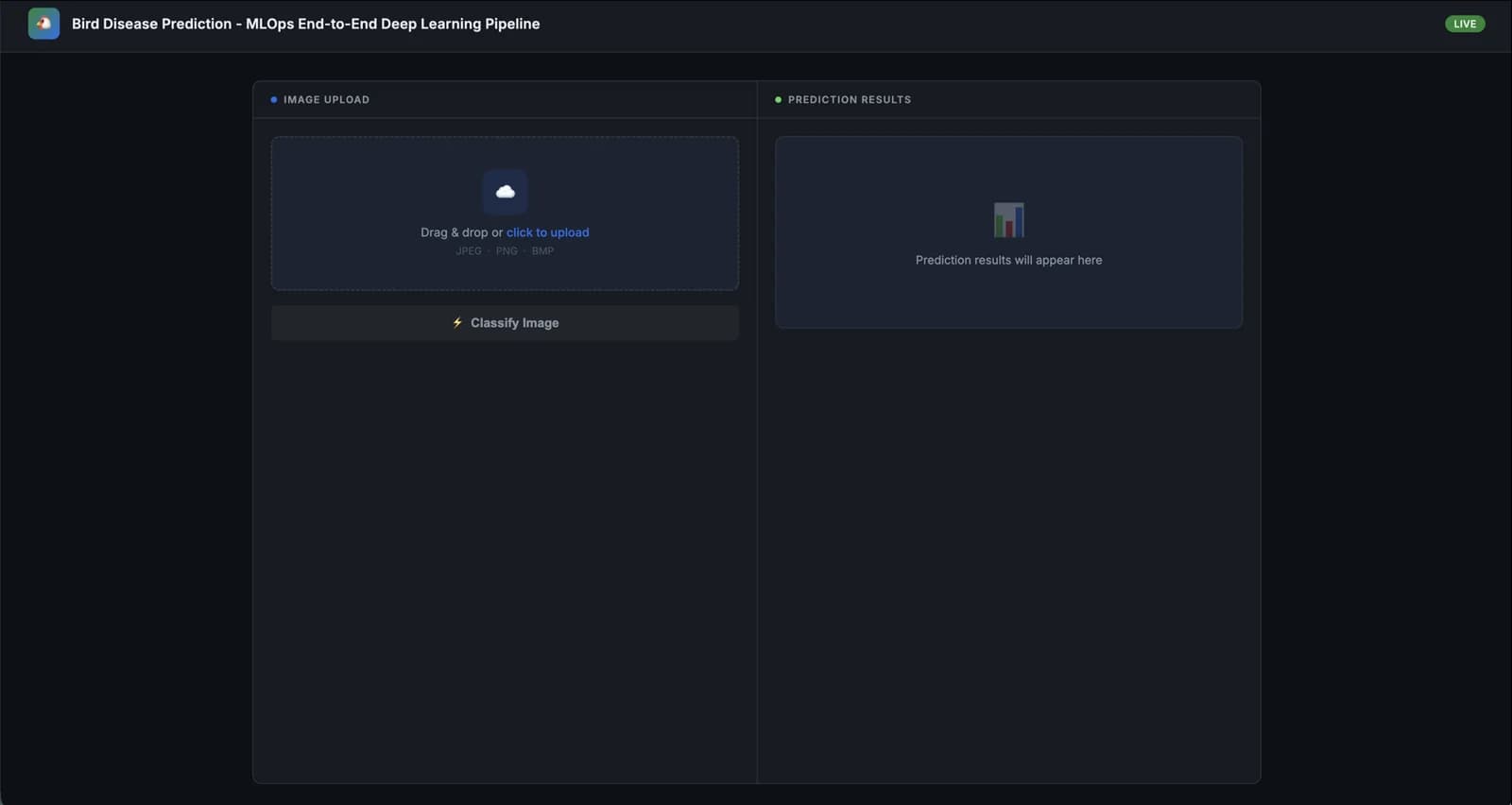
Project screenshotApplication interface
Bird Disease PredictionEnd-to-End MLOps Deep Learning
End-to-End MLOps Deep Learning Pipeline for Computer Vision CNN Training | Transfer Learning | Production Deployment
- Docker
- CI/CD
- REST
- Computer Vision
- +1
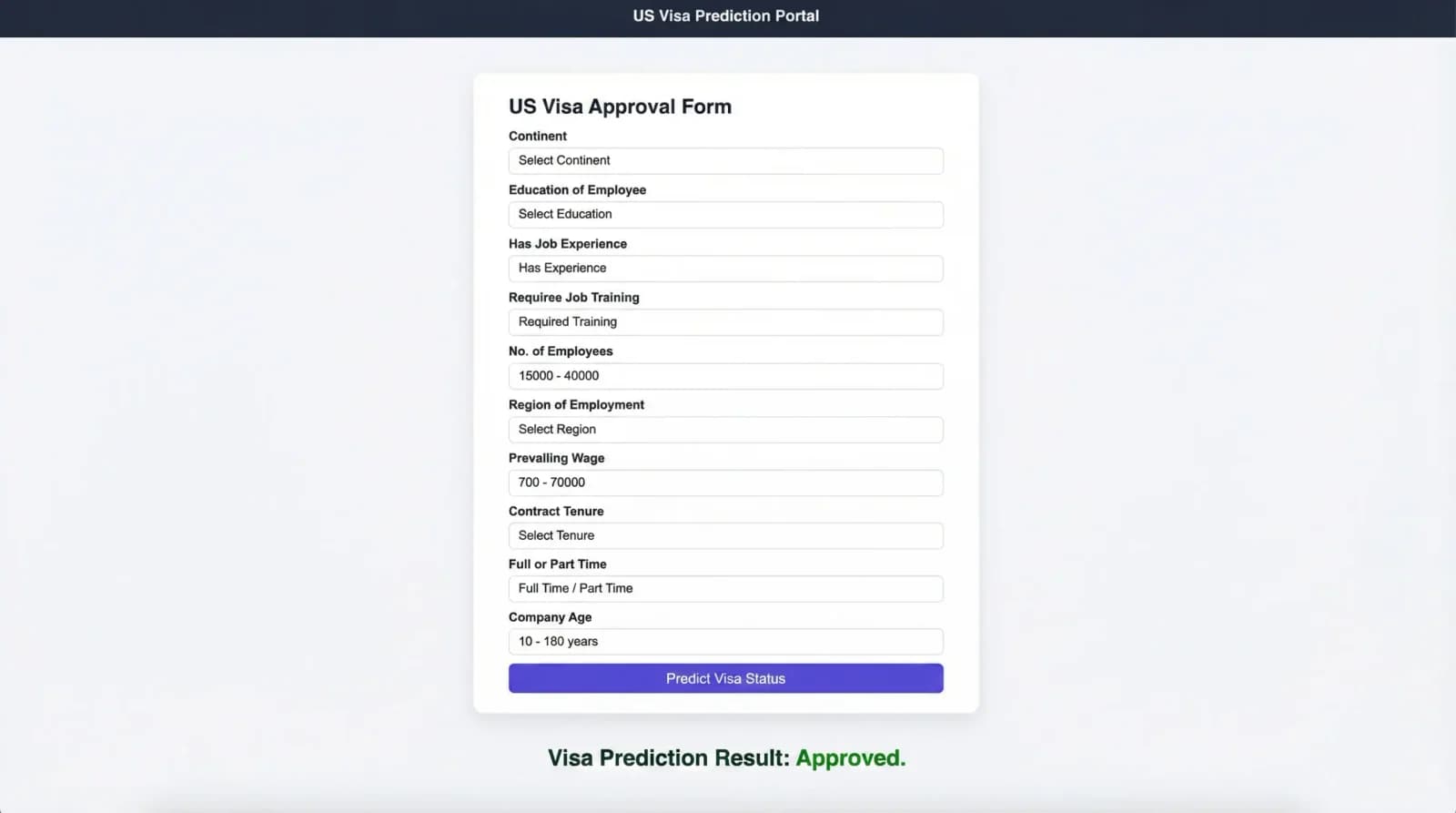
Project screenshotApplication interface
End-to-End MLOps ClassificationAWS + FastAPI + CI/CD
End-to-End MLOps Pipeline with CI/CD & Production Monitoring Data Ingestion → Training → Deployment → Monitoring
- FastAPI
- Docker
- CI/CD
- GitHub Actions
- +4
Uber Data Engineering ETL Project
- Python
- GCP
- BigQuery
- Mage.ai
Project overview
Uber Data Engineering ETL Project
End-to-End Data Engineering on Google Cloud Platform ETL Orchestration | BigQuery Analytics | Real-Time Reporting
- Python
- GCP
- BigQuery
- Mage.ai
- +4
07 / FAQ
Common questions.
What does a bioinformatics data engineer do?
A bioinformatics data engineer builds the pipelines that move sequencing, sample and clinical data into tested, versioned storage. Scientists, analysts and machine learning models then work from the same reproducible data instead of scattered files.
Can you process large genomics datasets?
Yes. Large datasets are processed in parallel with Apache Spark, stored as partitioned Parquet files on cloud object storage, and run on compute that scales up for heavy jobs and back down afterwards to control cost.
Do you build machine learning on genomic and clinical data?
Yes. I build feature pipelines that prepare genomic and clinical data for modelling, track experiments in MLflow and validate models on held-out data. Domain scientists review the results before they inform any decision.
How do you protect patient data?
Patient data is de-identified where possible, encrypted, and limited by role-based access, with audit logs on every pipeline. Compliance requirements such as HIPAA and GDPR are agreed with your team before any data moves.
Data Engineering
Need Bioinformatics Data Engineering & Analytics?Let’s scope it together.
Tell me about the goal, the data and the constraints. I’ll reply with questions and a practical first step.