Measured outcome
No measured outcome has been published with supporting evidence for this project.
04 / Project / Data Engineering
End-to-End MLOps Pipeline with CI/CD & Production Monitoring Data Ingestion → Training → Deployment → Monitoring
01 / Overview
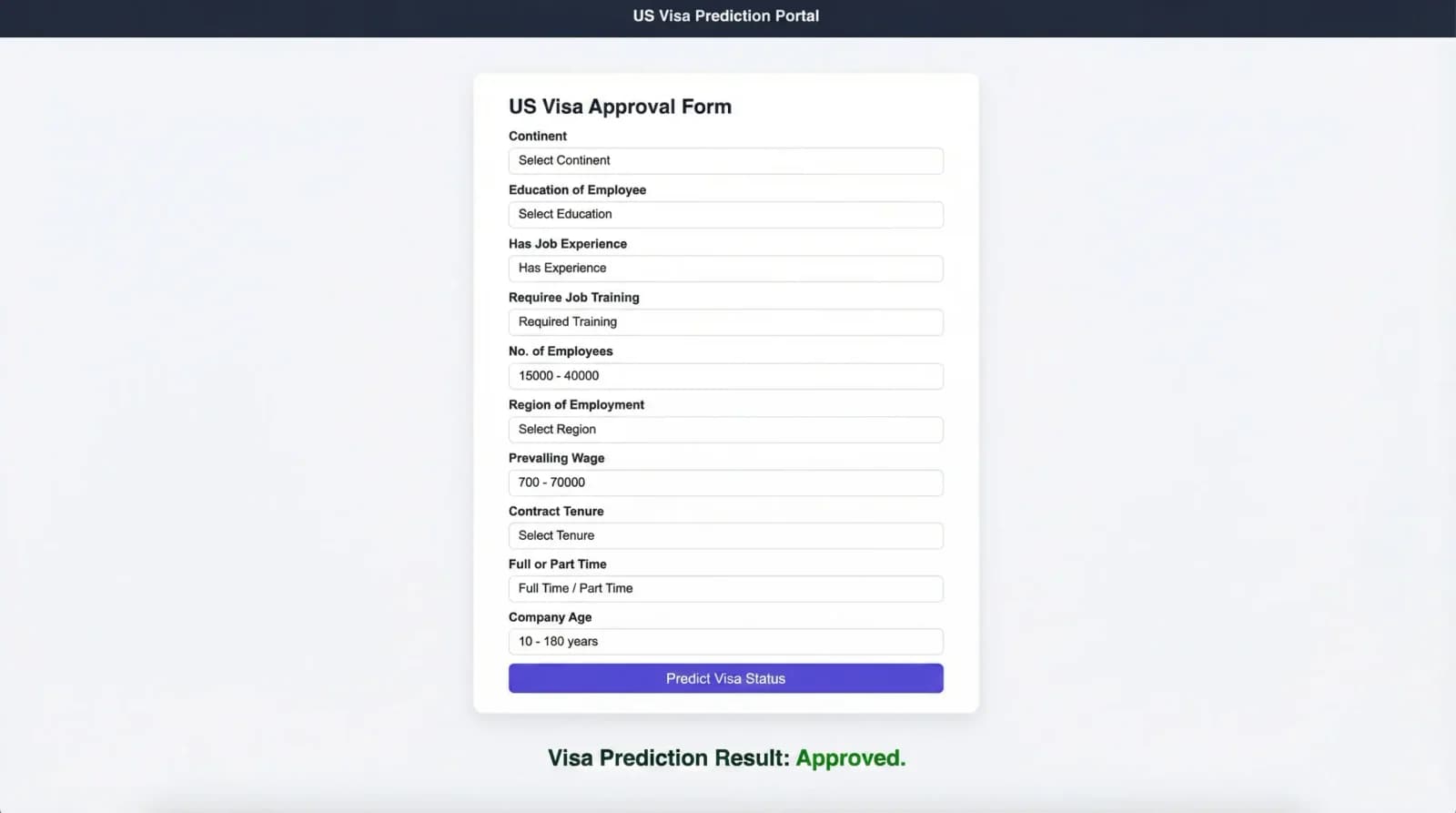
Built an end-to-end MLOps pipeline for a U.S. Visa Approval Classification System, designed to take a model from data ingestion → training → deployment → monitoring with production-grade practices. The project covers data ingestion and transformation, model training with hyperparameter optimization, and a repeatable pipeline structure for scalability and maintainability. It also supports training multiple models (XGBoost, CatBoost, RandomForest) and persisting artifacts for reproducible runs. For deployment, the application is served via FastAPI (with a simple Jinja2 web UI and REST prediction endpoint), containerized with Docker, and deployed on AWS EC2. The Docker image is stored in AWS ECR, and deployments are automated through a GitHub Actions CI/CD pipeline. The project additionally includes model registry/versioning using AWS S3 and continuous evaluation/drift monitoring with Evidently AI, enabling ongoing reliability checks as data changes over time.
Measured outcome
No measured outcome has been published with supporting evidence for this project.
02 / Architecture
Grouped from the stack recorded for this project. Scroll to walk the layers, or hover one for its components.
Where a request or upload enters the system.
Handled by FastAPI, REST.
Handled by S3.
Handled by Docker, CI/CD, GitHub Actions and more.
03 / Tech stack
API & services
Data & vector stores
Cloud & monitoring
04 / Case study
End-to-End MLOps Pipeline with CI/CD & Production Monitoring
Data Ingestion → Training → Deployment → Monitoring
Built an end-to-end MLOps pipeline for a U.S. Visa Approval Classification System, designed to take a model from data ingestion → training → deployment → monitoring with production-grade practices.
The project covers data ingestion and transformation, model training with hyperparameter optimization, and a repeatable pipeline structure for scalability and maintainability. It also supports training multiple models (XGBoost, CatBoost, RandomForest) and persisting artifacts for reproducible runs.
For deployment, the application is served via FastAPI (with a simple Jinja2 web UI and REST prediction endpoint), containerized with Docker, and deployed on AWS EC2. The Docker image is stored in AWS ECR, and deployments are automated through a GitHub Actions CI/CD pipeline. The project additionally includes model registry/versioning using AWS S3 and continuous evaluation/drift monitoring with Evidently AI, enabling ongoing reliability checks as data changes over time.
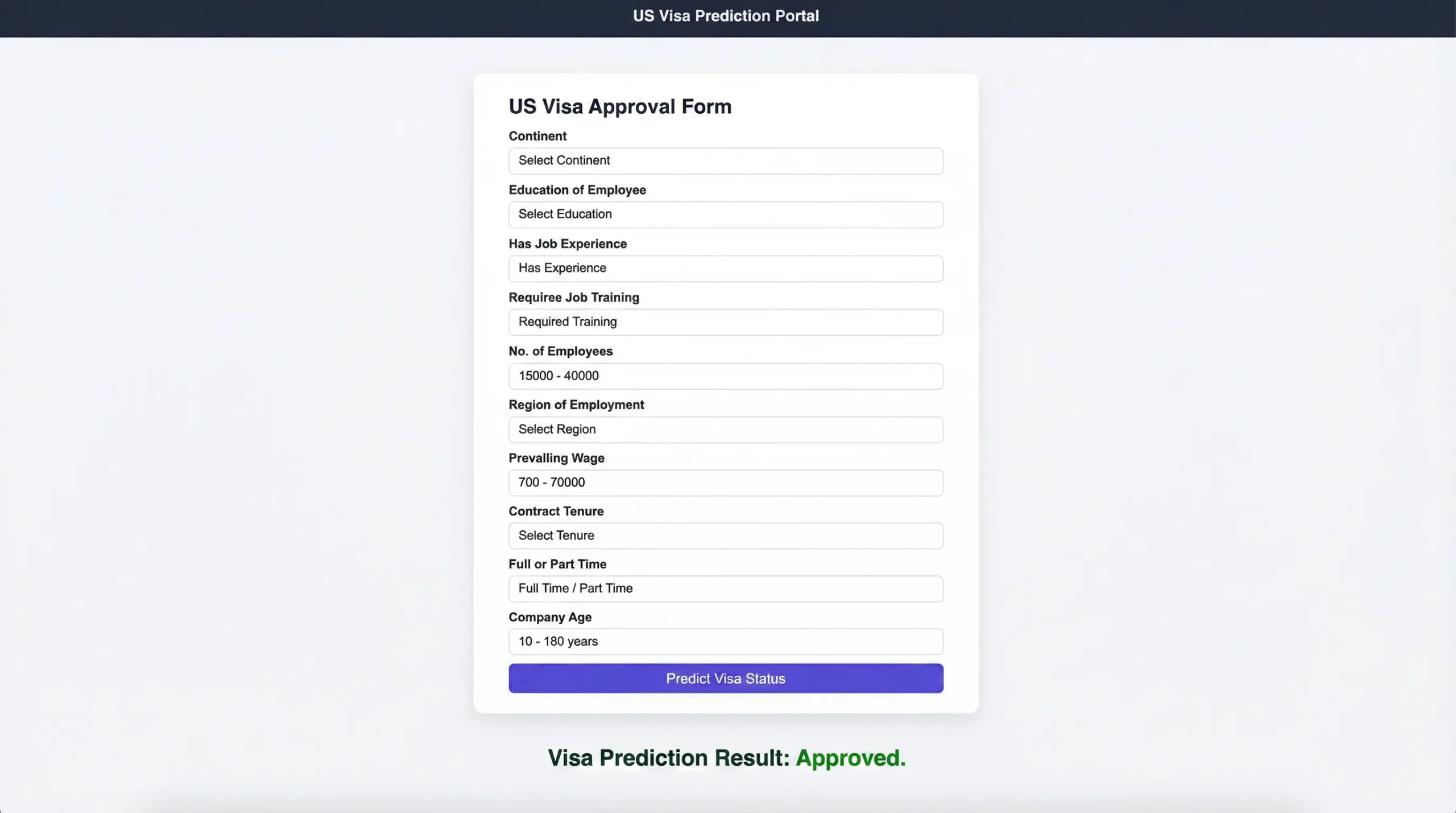
AWS Deployment: EC2 for hosting, ECR for container registry, S3 for model artifacts, automated CI/CD via GitHub Actions
Modular data ingestion and transformation pipeline with validation checks, outlier detection, and feature engineering.
🎯Support for XGBoost, CatBoost, and RandomForest with hyperparameter optimization and cross-validation.
🐳Docker containerization with multi-stage builds for optimized image size and consistent deployment across environments.
⚡High-performance REST API with Jinja2 web interface for real-time visa approval predictions and batch processing.
📦AWS S3-based model registry with automatic versioning, metadata tracking, and rollback capabilities.
📊Evidently AI integration for continuous model performance monitoring and data drift detection in production.
Complete source code, pipeline configurations, deployment scripts, and comprehensive documentation available on GitHub.
I build production-grade ML pipelines with automated training, deployment, and monitoring on AWS, GCP, and Azure.
05 / Related work
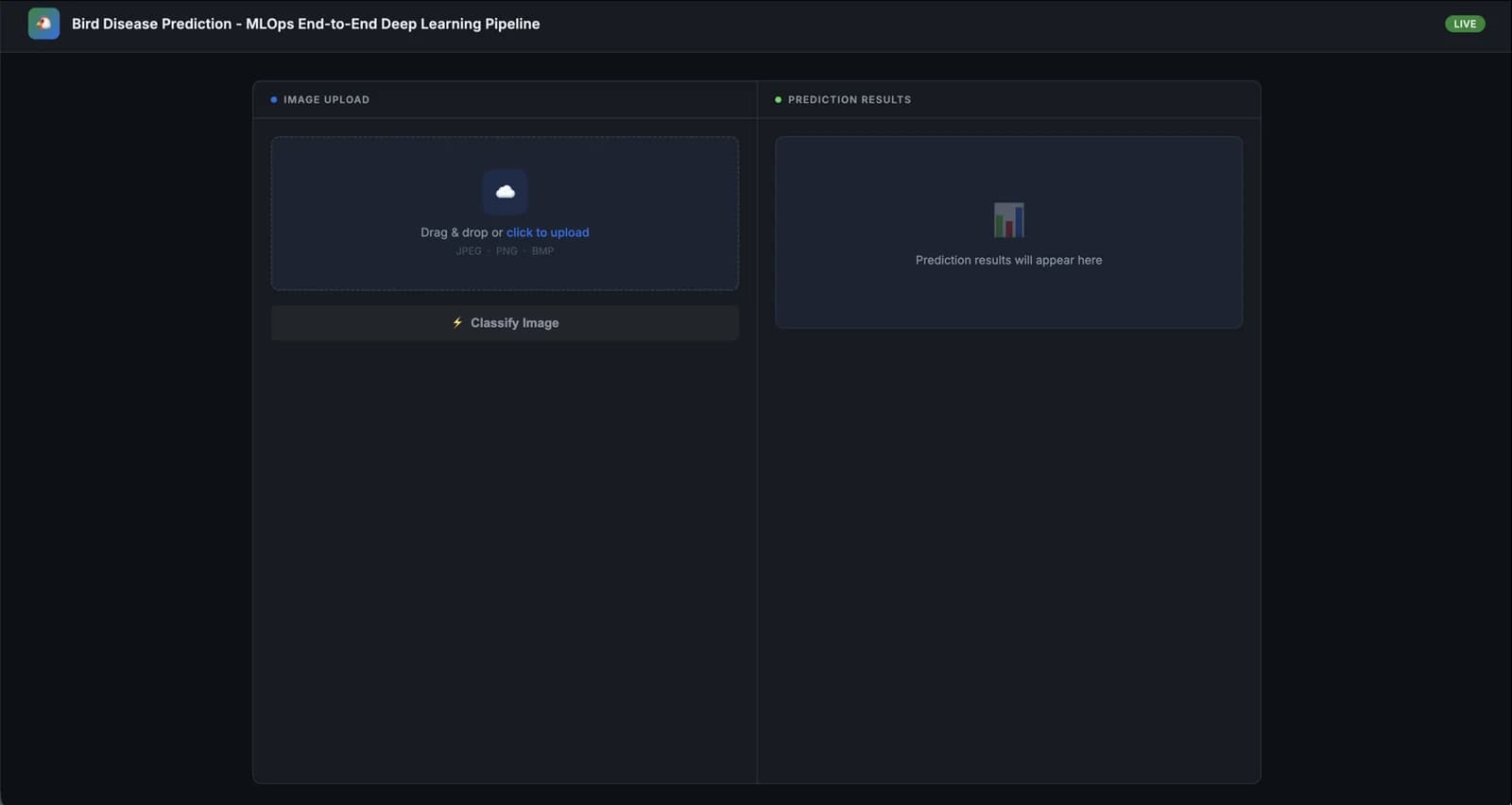
End-to-End MLOps Deep Learning Pipeline for Computer Vision CNN Training | Transfer Learning | Production Deployment
End-to-End Data Engineering on Google Cloud Platform ETL Orchestration | BigQuery Analytics | Real-Time Reporting
Naked Media React | Gatsby.js | Spring | Kafka | SOA Architecture
Next step
Tell me what you’re working on and where it gets difficult. I’ll share how this project’s approach would apply to your case.