Measured outcome
No measured outcome has been published with supporting evidence for this project.
04 / Project / RAG
AI-Powered Medical Knowledge Assistant Retrieval-Augmented Generation (RAG) Chatbot
01 / Overview
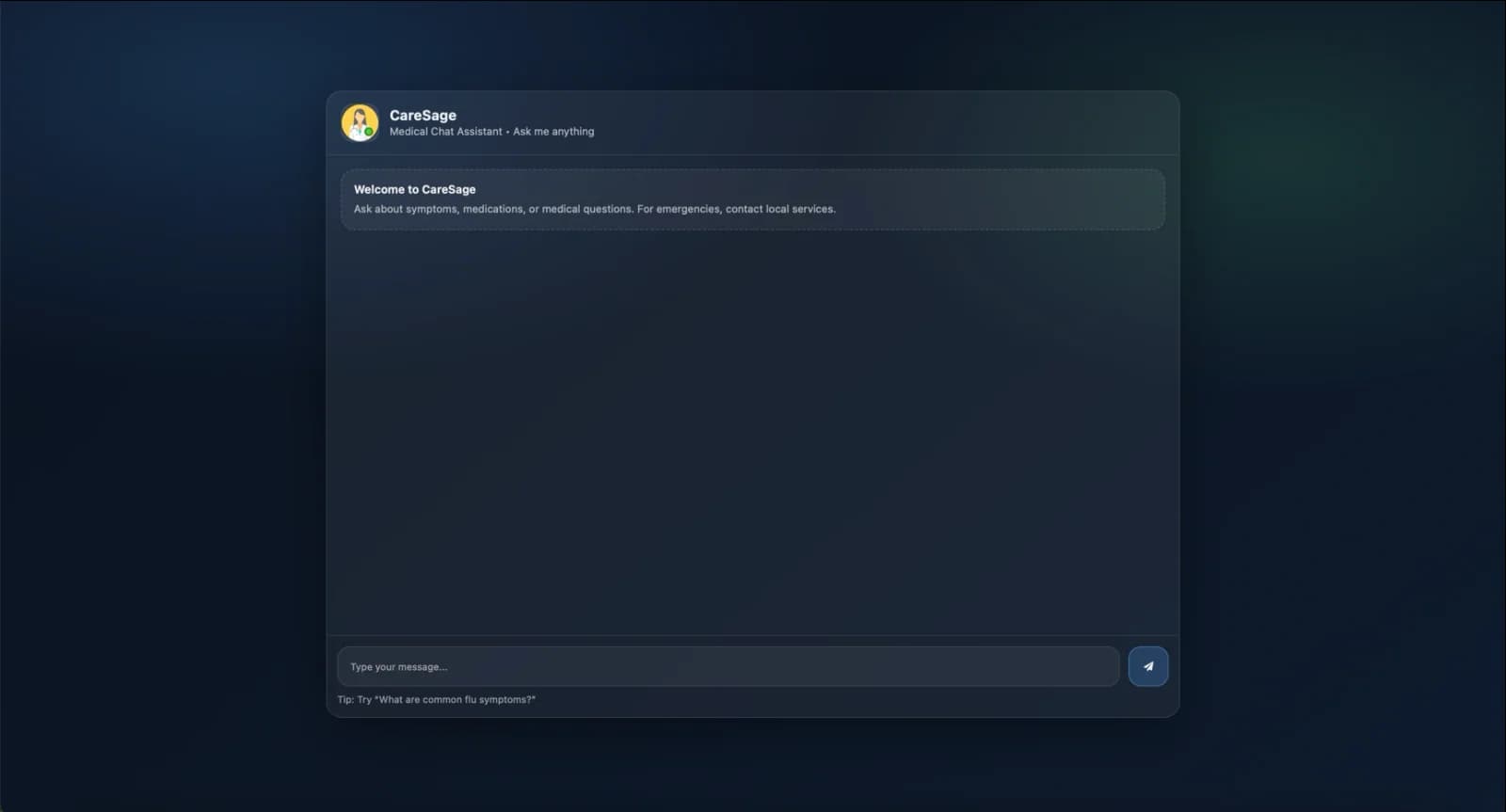
Built CareSage, a Retrieval-Augmented Generation (RAG) medical chatbot that answers user questions using knowledge pulled from PDF documents instead of guessing. The app ingests PDFs with PyPDF, chunks and embeds content using sentence-transformers, stores vectors in Pinecone, and retrieves the most relevant passages at query time. A LangChain pipeline then combines the retrieved context with an OpenAI LLM to generate grounded, helpful responses. The system is served through a lightweight Flask backend with a clean chat UI, environment-based configuration via python-dotenv, and modular components for document ingestion, indexing, retrieval, and response generation - making it easy to extend to new medical document sets or internal knowledge bases.
Measured outcome
No measured outcome has been published with supporting evidence for this project.
02 / Architecture
Grouped from the stack recorded for this project. Scroll to walk the layers, or hover one for its components.
Where a request or upload enters the system.
Handled by Flask.
Handled by LangChain, OpenAI, RAG.
Handled by Pinecone.
Handled by Python.
03 / Tech stack
API & services
AI layer
Data & vector stores
Other components
04 / Case study
AI-Powered Medical Knowledge Assistant
Retrieval-Augmented Generation (RAG) Chatbot
Built CareSage, a Retrieval-Augmented Generation (RAG) medical chatbot that answers user questions using knowledge pulled from PDF documents instead of guessing. The app ingests PDFs with PyPDF, chunks and embeds content using sentence-transformers, stores vectors in Pinecone, and retrieves the most relevant passages at query time.
A LangChain pipeline then combines the retrieved context with an OpenAI LLM to generate grounded, helpful responses.
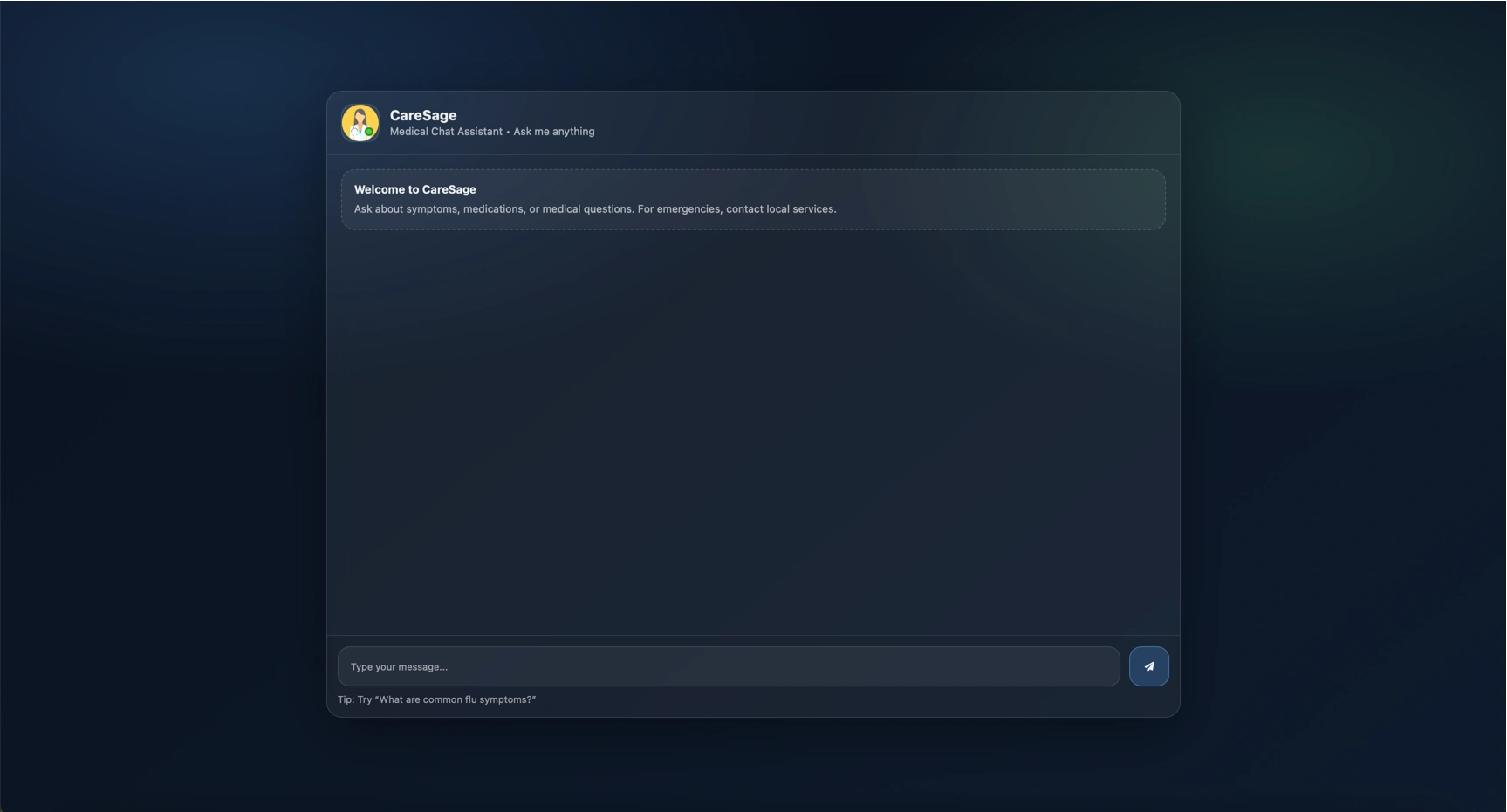
The system is served through a lightweight Flask backend with a clean chat UI, environment-based configuration via python-dotenv, and modular components for document ingestion, indexing, retrieval, and response generation - making it easy to extend to new medical document sets or internal knowledge bases.
Automatically extracts and processes medical literature from PDF documents using PyPDF for comprehensive knowledge base building.
🧠Uses sentence-transformers to create semantic embeddings of document chunks, ensuring accurate context retrieval.
🔍Stores and retrieves document vectors in Pinecone for lightning-fast semantic search across medical knowledge.
🤖Combines LangChain orchestration with OpenAI LLM to generate accurate, context-grounded medical answers instead of hallucinations.
💬Lightweight Flask-powered web UI for seamless conversational interactions with the medical knowledge base.
⚙️Separated components for ingestion, indexing, retrieval, and generation - easy to extend to new document sets or knowledge bases.
Healthcare professionals can quickly search through vast medical literature, research papers, and clinical guidelines to find relevant information.
Organizations can build custom knowledge bases from internal documents, SOPs, and training materials for instant employee access.
Medical students and researchers can ask questions about complex topics and receive answers grounded in authoritative sources.
Provides evidence-based information to support clinical decision-making by referencing validated medical documents.
Responses are grounded in actual document content, not LLM hallucinations
🔒Every answer can be traced back to specific documents for verification
🔄Knowledge base can be updated anytime by adding new PDFs
🎯Focused on medical knowledge without irrelevant information
Add speech-to-text and text-to-speech for hands-free medical queries
Track common queries, usage patterns, and knowledge gaps
Extend to support medical documents in multiple languages
Role-based permissions for different user types and document sets
📂Complete source code and documentation available on GitHub.
I can build custom knowledge assistants for your organization’s internal documents, medical literature, or specialized knowledge bases.
05 / Related work
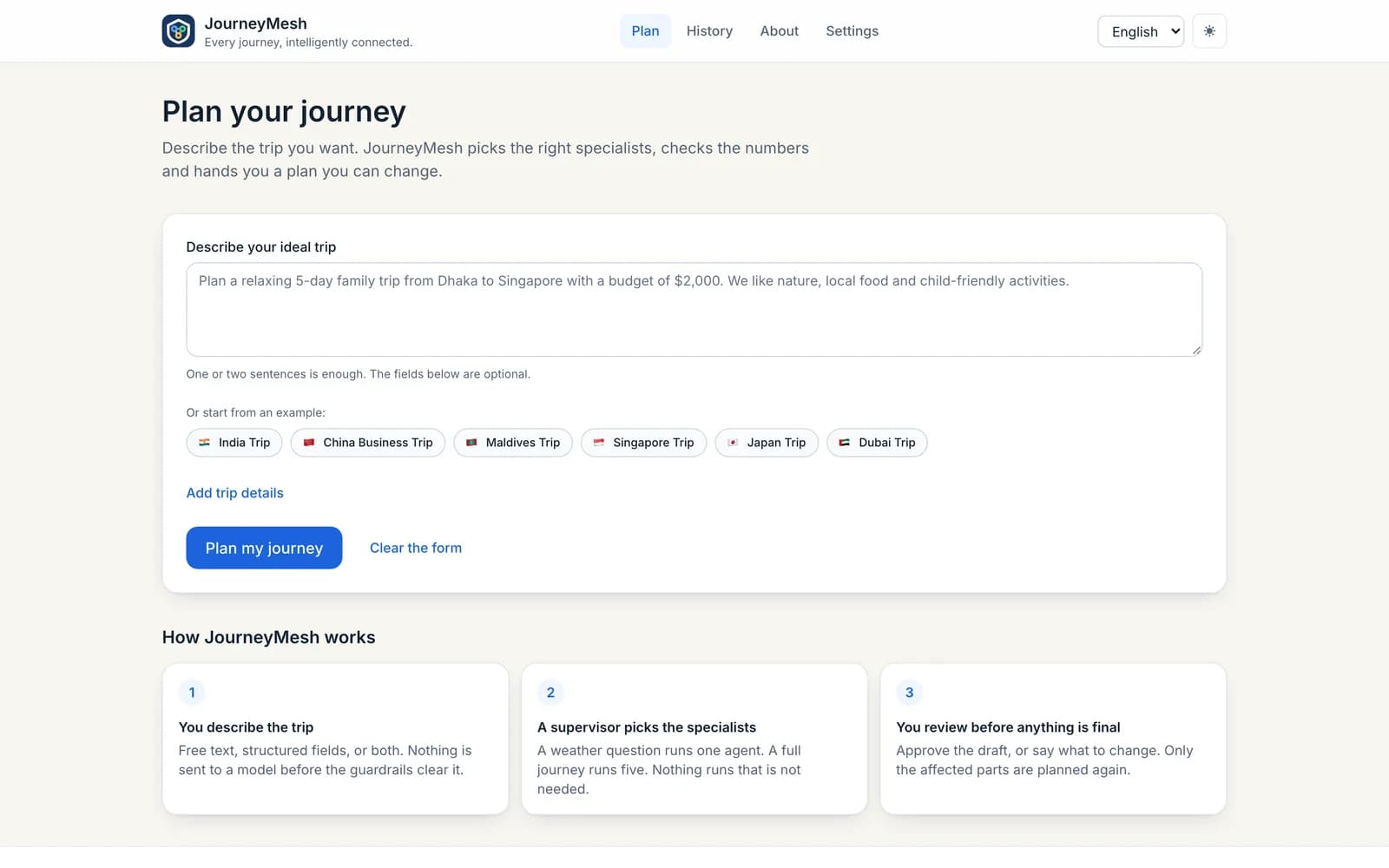
Supervisor-routed multi-agent travel planning with guardrails, evaluation and human review
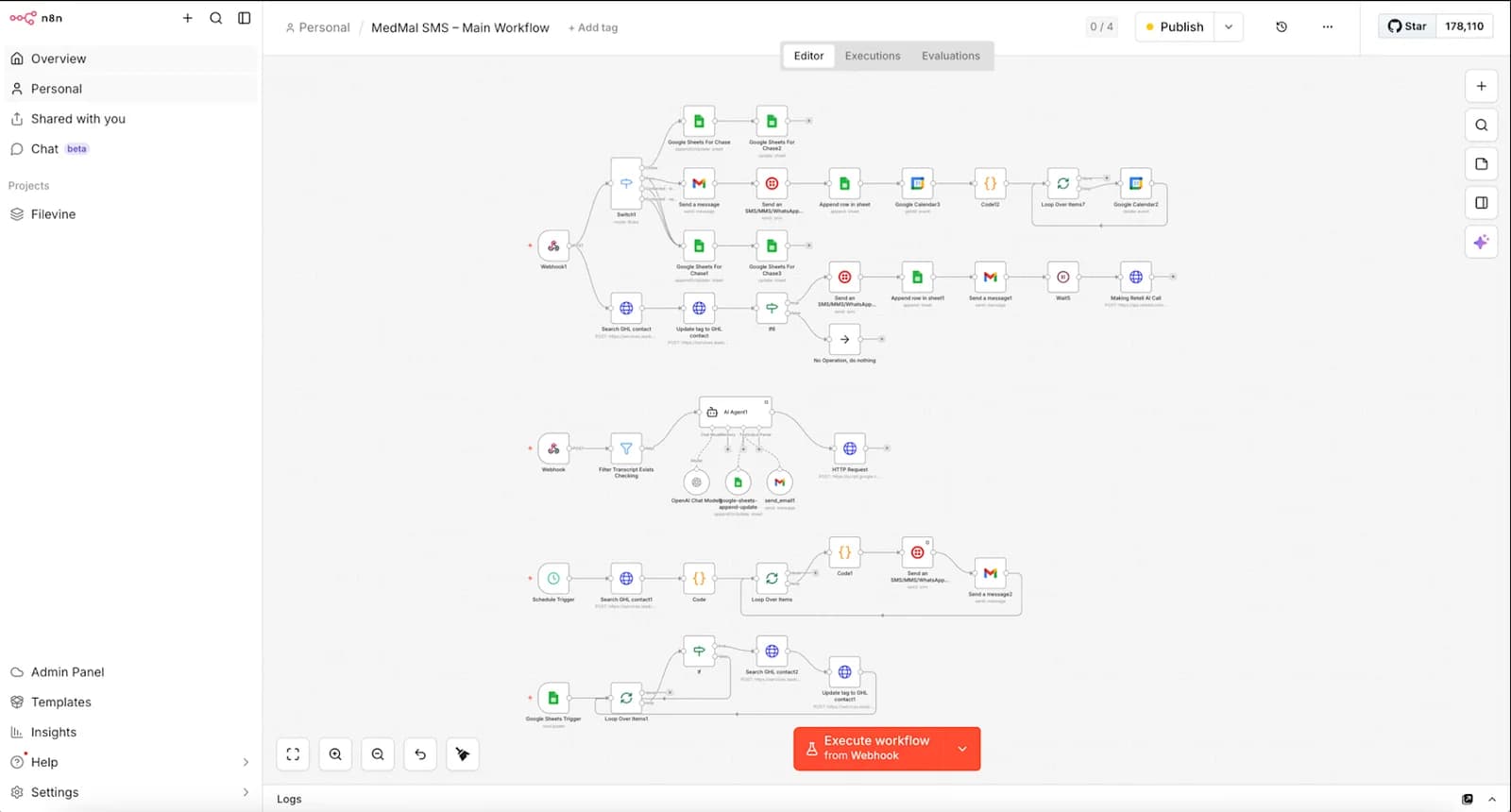
AI automation engineer building end-to-end workflow systems with n8n, integrating Retell AI voice agents, OpenAI GPT-4, and Claude with GoHighLevel CRM, Twilio, and Make.com. Delivered voice-agent platforms that automated 1,000+ monthly sales calls with real-time transcription, sentiment analysis, and follow-up automation - saving clients hundreds of hours every month.
Next step
Tell me what you’re working on and where it gets difficult. I’ll share how this project’s approach would apply to your case.